
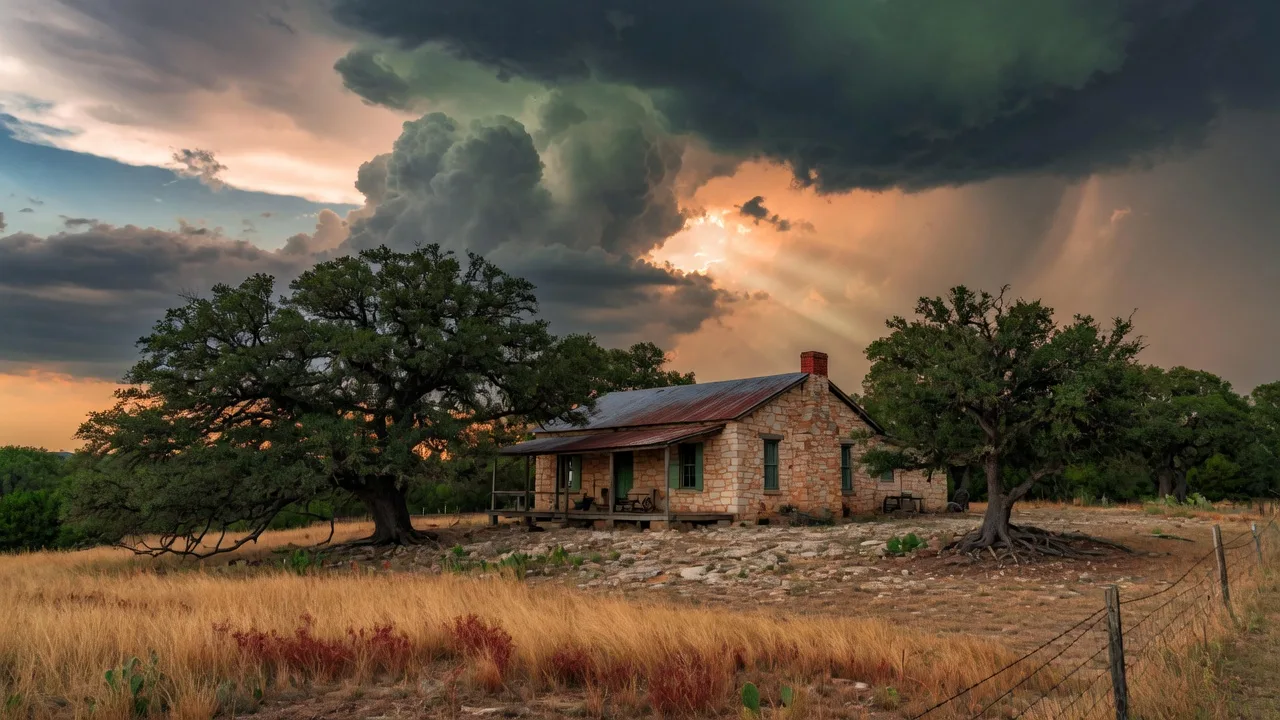
Patrick's Quick Answer
Home insurance in the Texas Hill Country has been rising sharply, and hail is the biggest driver. Per the Texas Department of Insurance 2025 preliminary market overview, the Texas average homeowners premium reached 3,506 dollars in 2025, up from 3,291 in 2024, and hail led 2024 losses at 4,932.98 million dollars. Redfin and First Street data (August 2026) show wildfire risk for 100 percent of properties in ZIP 78163 and 99 percent in 78070. Your individual premium depends on your home, so use the official sources I list here and get an address-level quote before you buy.
Tell Patrick what you are looking for
Tell Patrick what you are looking for, and he will help you factor insurance into your budget and get you pre-approved with the real numbers attached.
Home insurance is one of the biggest recurring costs of owning in the Texas Hill Country, and it has been climbing fast. Here is what the data actually shows, with the sources and dates attached, and where to check the things that are specific to your home.
Average premiums, per the Texas Department of Insurance
The Texas Department of Insurance 2025 preliminary market overview puts the Texas average homeowners premium at 3,506 dollars in 2025, up from 3,291 dollars in 2024. The series runs: 2022, 2,374 dollars; 2023, 2,800 dollars; 2024, 3,291 dollars; and 2025, 3,506 dollars (preliminary).
A note on sourcing: the Texas Comptroller lists 2023 as 2,803 dollars, so the two official sources differ slightly on that one year. Cite whichever source you use by name rather than blending them.
Average premium rate changes were 10.8 percent in 2022, 21.1 percent in 2023, 18.7 percent in 2024, and 4.3 percent in 2025, per TDI.
2024 losses by peril
Per TDI, 2024 losses by peril were led by hail at 4,932.98 million dollars, then wind at 2,210.03 million, water and freeze at 1,610.89 million, and fire at 1,091.81 million. That is why hail shows up so often in Hill Country insurance conversations: it is the single largest driver of losses in Texas.
Hail and wildfire risk in your ZIP
Redfin and First Street data (August 2026) show wildfire risk for 100 percent of properties in ZIP 78163 and 99 percent in 78070, with major wind risk for 86 percent in 78163 and 91 percent in 78070. These are ZIP-level figures from one data provider, so treat them as direction.
For address-level wildfire risk, use the Texas A&M Forest Service Texas Wildfire Risk Assessment Portal at texaswildfirerisk.com.
What raises an individual premium
What raises an individual premium, such as roof age, deductibles, and claims history, is unverified from an official source in my research, so I will not state it as fact. Check the TDI HelpInsure resource for the current official guidance on premium factors, and get an address-level quote from a licensed agent before you rely on any number.
County-level averages for Comal, Kendall, and Guadalupe are in the TDI interactive map and could not be verified as text, so the official place to look is tdi.texas.gov/general/texas-homeowners-insurance-market-overview.html.
Frequently Asked Questions
How much is homeowners insurance in Texas right now? Tap to expand
What has driven Texas premiums up? Tap to expand
How much hail and wildfire risk is there in the Hill Country? Tap to expand
What raises an individual home insurance premium? Tap to expand
Where do I find county-level averages for Comal, Kendall, and Guadalupe? Tap to expand
Can I get homeowners insurance on a Hill Country house with no fire hydrant? Tap to expand
What if no standard insurer will write the policy? Tap to expand
Do wells and septic affect insurance on a Hill Country home? Tap to expand
Factor insurance into your buying math
Tell Patrick what you are looking for, and he will help you factor insurance into your budget and get you pre-approved with the real numbers attached.
About Patrick Kevin Fagan, REALTOR®
Patrick Kevin Fagan is a Texas Real Estate Sales Agent (#454749) with AXEN Realty LLC and a Senior Loan Officer (NMLS ID #877741) with NEXA Mortgage, LLC (NMLS #1660690). He brings 23+ years in mortgage lending and 19 years in real estate, serving homebuyers, homeowners, and sellers across Greater San Antonio and the Texas Hill Country.
Answered by Patrick Kevin Fagan
Texas Real Estate Sales Agent #454749, AXEN Realty LLC · Senior Loan Officer, NMLS ID #877741, NEXA Mortgage, LLC
Call or text: 210-317-6514
