
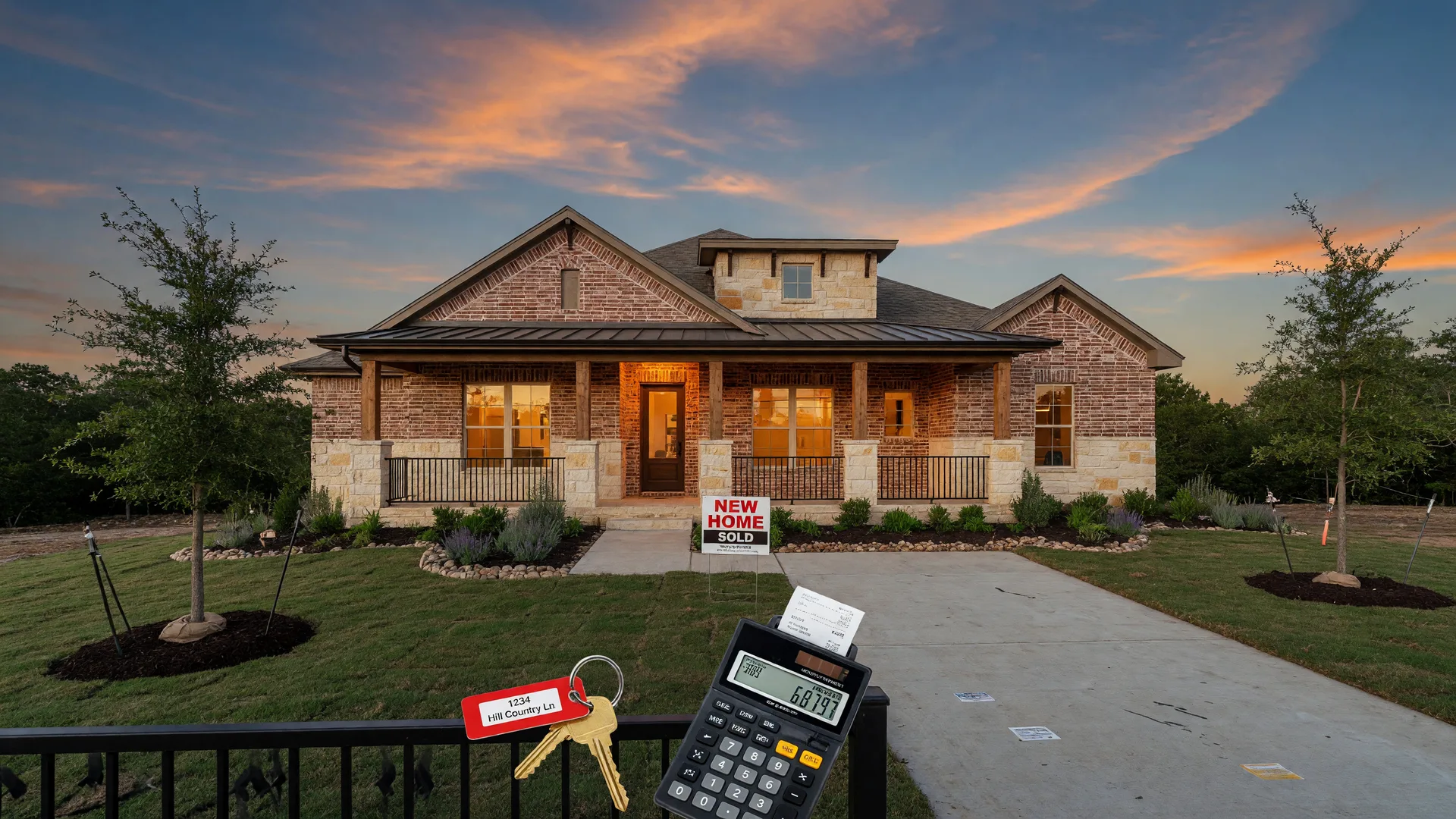
Patrick's Quick Answer
Yes, you can use down payment assistance and builder incentives on the same home, and the order matters. Reserve the DPA first, because funds are first-come. Then match the builder incentive to your loan and compare Loan Estimates before you choose a lender. Done right, DPA can cover your down payment, a builder credit can cover your closing costs, and a rate buydown can lower your payment. Start with pre-approval so every lever works with your loan.
Patriot Nation, this playbook is for San Antonio and Texas Hill Country buyers who want to keep more cash in their pocket in 2026. Three tools can do that for you: down payment assistance (DPA for short), builder incentives, and rate buydowns. Each one does a different job, and when you stack them in the right order, they can cut your cash to close and your monthly payment at the same time. This article shows you what each lever really does, the order that works, and the mistakes that cost buyers money.
The 3 Levers: What Each One Does and What It Lowers
Think of these as three separate knobs on the same deal. Each lever changes a different number, and none of them duplicate the others.
| Lever | It lowers | How it works |
|---|---|---|
| 1. Down payment assistance | Cash to close | A grant or a forgivable second loan that covers part or all of your down payment and often part of closing costs. Nothing changes on your monthly payment, but you bring far less cash to the table. |
| 2. Builder incentives | Cash to close and price | Closing-cost credits, design upgrades, or below-market financed rates that the builder offers to sell homes faster. The credit cuts what you pay at closing; an upgrade credit cuts what you pay for the build. |
| 3. Rate buydowns | Monthly payment | Points, often paid by the builder, that lower your interest rate. A lower rate means a lower monthly payment for one year, two years, or the life of the loan. |
The short version: DPA lowers what you bring, incentives lower what you pay at closing or for the build, and buydowns lower what you pay every month. You want all three working at once, and the rest of this guide shows the order.
Lever 1: Down Payment Assistance Cuts the Cash You Bring
Down payment assistance is money from a state, city, or nonprofit program that covers part or all of your down payment, and often part of your closing costs too. Some assistance is a grant you never pay back. Some is a second loan that is forgiven after you live in the home for a set number of years. Either way, your cash to close drops by the amount of the help.
Texas has two strong statewide programs through the Texas State Affordable Housing Corporation (TSAHC), plus local programs where you buy. The full down payment assistance page maps every program by service area, and this table shows the 2026 numbers that matter:
| Program | Assistance amount | Structure | Key notes |
|---|---|---|---|
| TSAHC Home Sweet Texas (statewide) | 2% to 5% of the loan amount | Grant or 3-year forgivable second loan | Income up to 150% of area median income in 2026; credit 620+ on FHA, VA, USDA and 640+ conventional; homebuyer education required. |
| TSAHC Homes for Texas Heroes (statewide) | 2% to 5% of the loan amount | Grant or 3-year forgivable second loan | For teachers, veterans, nurses, police, firefighters, EMS, and correctional officers; income up to 170% of area median income in 2026; no first-time buyer requirement. |
| City of San Antonio Homeownership Incentive Program (HIP) | $1,000 to $15,000 (HIP 120); $1,000 to $30,000 (HIP 80) | 0% interest second loan, part forgivable | For homes inside San Antonio city limits; income tiers by area median income; purchase price caps apply. Paused for the fiscal year 2026 cycle and not accepting new applications while the city awaits funding renewal; amounts update annually, confirm on the date you apply. |
The most common DPA structure, 5% of the loan amount, is a big number. On a $339,500 loan, 5% is $16,975. That can cover a $10,500 down payment plus most of the closing costs on a $350,000 home.
Want the deeper map? Read Home Sweet Texas and TSAHC programs explained and the San Antonio DPA guide.
Two qualifications matter here. TSAHC loans go through a TSAHC-approved participating lender, so your lender has to be on the list. And most programs require a homebuyer education course before closing, which is easy to schedule and worth the hour. Neither is a wall; both are steps Patrick walks you through.
Lever 2: Builder Incentives Cut the Cost of a New Construction Home
Builders in San Antonio and the Hill Country are using incentives to move inventory while rates are high. The incentive comes in three main forms:
- Closing-cost credits. The builder pays a set amount toward your closing costs, sometimes $8,000, $10,000, or more. This is cash you do not have to bring. D.R. Horton advertised up to $8,000 and Meritage up to $10,000 in late September 2026.
- Rate buydowns. The builder pays points to lower your rate for one year, two years, or the whole loan. Coventry advertised a 2-1 buydown at 3.49% the first year in its late September 2026 San Antonio sales event.
- Design upgrades and flex cash. Credits toward the design center or cash you can apply to upgrades. Perry advertised up to $35,000 in flex cash in its late September 2026 event.
Those examples are verified on the San Antonio Builder Incentives, Decoded guide, which tracks each offer with its date. Offers change weekly, so that guide is the live board.
Two rules protect you here. First, register your agent or bring them with you on your first model home visit; most builders only recognize your agent if they are registered that day. Second, ask for the incentive in writing with its expiration date, and check whether it requires the builder's lender. The full comparison framework, including builder lender vs your own lender, is on the New Construction hub.
Program caps matter too. FHA limits seller and builder contributions to 6% of the purchase price. VA lets the seller pay normal closing costs plus up to 4% in concessions. A big credit package can hit those caps, which is why Patrick confirms the split on every quote before anything is signed. See the incentive section of the New Construction page for the current board.
Lever 3: Rate Buydowns Cut Your Monthly Payment
A rate buydown pays points up front to lower your interest rate, and the lower rate means a lower monthly payment. The most common structure in new construction is a temporary 2-1 buydown: your rate is 2 points lower in year one, 1 point lower in year two, and sits at the full note rate from year three on. The builder usually funds the cost of the buydown as part of the incentive.
Here is the honest math on a $339,500 loan (the amount after 3% down on a $350,000 home), with the 30-year fixed average at 7.03% for the week of September 24, 2026, per Freddie Mac's Primary Mortgage Market Survey. Principal and interest only:
| Period | Monthly P&I | Note |
|---|---|---|
| Year 1 (5.03%) | $1,829 | Rate is 2 points below the note rate |
| Year 2 (6.03%) | $2,042 | Rate is 1 point below the note rate |
| Year 3 and after (7.03%) | $2,266 | Full note rate for the rest of the term |
Year one saves about $437 a month versus the full note rate. Year two saves about $224 a month.
Over the first two years, the buydown is worth about $7,900. That is the number the builder pays when they fund the buydown.
From year three on, the payment steps up to the note rate, so the buydown is a great fit when your income is expected to grow or when the builder pays for it.
Buydowns are explained in full in the interest rate buydowns guide (2-1, 3-2-1, and 1-0).
The Stacked Example: One $350,000 New Build, Three Ways
This is the playbook in action. Same price, same loan type, three different outcomes. Every number below is an example with its assumptions stated, not a quote.
Assumptions: $350,000 purchase price, conventional loan, 3% down ($10,500), $339,500 loan amount. Closing costs estimated at 2% of price ($7,000), a middle figure for Texas; the exact number is on your Loan Estimate and varies by lender and title company. DPA tier assumed at 5% of the loan amount ($16,975), the highest TSAHC tier; your tier depends on income and program. Builder credit assumed at $10,000, in line with current advertised offers, and assumed to stay below FHA and VA caps for an eligible loan.
| Scenario | Down payment | Closing costs | Cash you bring |
|---|---|---|---|
| No help | $10,500 | $7,000 est. | about $17,500 to bring |
| DPA only (5% of loan, $16,975) | $0 of your own | covered up to $6,475 | about $525 plus prepaids |
| DPA + $10,000 builder credit | $0 of your own | credit covers the rest | near $0 beyond prepaids and earnest money |
Stacked, the two programs move about $17,000 of the cost off your plate, and the buydown on top lowers your payment in years one and two.
Your real number depends on your income tier, the program's price cap for your county, and the builder's written incentive. That is exactly the math Patrick runs before you commit.
One honest note about the caps: on a $350,000 home, a $10,000 builder credit is about 2.9% of the price, comfortably under the FHA 6% cap and within VA's structure. Bigger credit packages on lower-priced homes can hit the caps, which only means the program, not the deal, decides the ceiling.
The Order That Works: 6 Steps to Stack Without Losing Anything
The order is the playbook. Skip a step and you can lose a lever. Follow it and the three tools line up:
- 1
Get pre-approved first.
Know your price range, your loan type, and your rate before you look at homes. Every lever below works for a real loan, not a guess. Start your pre-approval, or read how to get pre-approved.
- 2
Reserve the DPA early.
Program funds are first-come, and income and price limits apply by county. Check TSAHC's limits for the county you are buying in, confirm your lender is a participating lender, and book the homebuyer education class now, not at closing.
- 3
Register your agent before the first builder visit.
Most builders only recognize your agent if they register you on the first visit. Walk in with Patrick's name on the guest card and representation costs you nothing out of pocket.
- 4
Get the incentive in writing, then compare Loan Estimates.
Ask what the incentive requires, including whether it needs the builder's lender, and line up two Loan Estimates: one with the incentive and one without. Compare rate, APR, points, fees, and total cash to close. Sometimes the builder's lender wins; sometimes your lender wins with DPA.
- 5
Confirm the caps and the fine print.
Check your loan type against the totals: FHA caps seller and builder contributions at 6% of the price, VA at normal closing costs plus 4% concessions. Also confirm the design center pricing and the lot premium, because those line items decide what the incentive is really worth.
- 6
Keep your file steady until closing.
No new credit, no job change, no large unplanned transfers between pre-approval and closing. The buydown rate and the DPA funding both depend on a clean file on the day you close.
The 3 Mistakes That Cost Buyers Money (and the Fix for Each)
None of these mistakes are deal-killers. They are just places where the money leaks, and each one has a simple fix.
Mistake 1: Using the builder's lender without comparing
The builder's lender often unlocks the advertised rate or credit, but that does not make it the best deal. Sometimes the special rate comes with higher fees, and sometimes your own lender quotes a better total with DPA. The fix is a side-by-side Loan Estimate comparison, and Patrick does that comparison for you. See the builder incentives guide for the full comparison framework.
Mistake 2: Assuming DPA and incentives cannot stack
They usually can. The two systems run on different tracks: DPA comes from the state or city program, and the incentive comes from the builder. The real questions are whether the incentive requires the builder's lender and whether the totals fit your loan program's caps. Run the check, then stack. Most buyers who assume it cannot work lose the lever without ever testing it.
Mistake 3: Getting the timing wrong
Three clocks run at once: the DPA funding window (first-come, and it can close before your closing date), the builder incentive expiration, and the first-visit registration rule. Add a job or credit change and the loan itself restarts. The fix is simple: reserve DPA early, get the incentive in writing with its date, register your agent on visit one, and keep your finances quiet until you close.
Frequently Asked Questions
Can I use down payment assistance on a new construction home?
Yes. Texas programs such as TSAHC Home Sweet Texas and Homes for Texas Heroes allow new construction as long as the home is your primary residence and you buy within the program's purchase price limit for your county. The loan goes through a TSAHC-approved participating lender, so the builder and the lender both need to work with that structure.
Can I stack builder incentives with down payment assistance?
Usually yes, with two checks. First, get the incentive in writing and see whether it requires the builder's lender. Second, confirm your loan caps: FHA limits seller and builder contributions to 6% of the price, and VA allows normal closing costs plus up to 4% in concessions. When both fit, the DPA covers the down payment and the credit or buydown lowers the rest.
Do I lose the builder incentive if I do not use the builder's lender?
It depends on the builder's written terms. Closing-cost credits often stay with any lender; financed rate buydowns are usually tied to the builder's lender. Compare two Loan Estimates before you choose, and take the better total. Patrick puts both next to each other.
Which should I use first: down payment assistance or the rate buydown?
Reserve the down payment assistance first, because funds are limited and first-come. The builder incentive is tied to the home and the contract, so it waits for the build. The DPA lowers your cash to close; the buydown lowers your monthly payment. They do different jobs, and the order that works is DPA first, then match the incentive to your loan.
What credit score do I need for these programs?
For TSAHC programs, the minimum is 620 on FHA, VA, and USDA loans and 640 on conventional loans. San Antonio's Homeownership Incentive Program has reported a minimum around 620. Programs update their rules yearly, so Patrick confirms the current minimum for your exact loan type and program on the date you apply.
What is the biggest timing mistake buyers make?
Waiting to reserve the down payment assistance until after they sign a contract. DPA funds are first-come, and missing a funding deadline can force a buyer to bring more cash. Two more timing mistakes: walking into a model home without your agent registered, and changing jobs or opening new credit before closing, which can restart the whole underwriting file.
Stack Your Levers on Paper Before You Commit. Start With Pre-Approval.
The playbook only works when the numbers are real. Your pre-approval tells you the price range, the loan type, and the rate, and that is the foundation every lever sits on. Patrick reviews your credit, income, and goals personally, no hard credit pull to start, and then maps the DPA program, the builder incentive, and the buydown onto your actual deal. On your side from the first call to the keys.
Questions first? Text or call Patrick at 210-317-6514.
Sincerely, Patrick Kevin Fagan, The Mortgage Patriot
More Ways to Start

Patrick Kevin Fagan
Texas Real Estate Sales Agent #454749, AXEN Realty LLC · Senior Loan Officer, NMLS ID #877741, NEXA Mortgage, LLC (NMLS #1660690)
Patrick Kevin Fagan is a dual-licensed REALTOR and mortgage loan officer with 23+ years in loan origination and 19 years in real estate, helping first-time homebuyers, growing families, sellers, and investors across Greater San Antonio and the Texas Hill Country. Because he handles the mortgage and the real estate together, he can structure one plan where the down payment assistance, the builder incentive, and the rate all fit before you sign.
Related Reading
San Antonio Builder Incentives, Decoded
Verified offers with dates
Interest Rate Buydowns Explained: 2-1, 3-2-1 and 1-0
How the step-down math works
Home Sweet Texas and TSAHC Programs
Grants vs forgivable loans
Buying New Construction: Incentives and Fine Print
Base price vs finished price
Down Payment Assistance in San Antonio
City and county programs
How to Get Pre-Approved
The documents and the steps

Equal Housing Opportunity
Patrick Kevin Fagan, NMLS ID #877741 · NEXA Mortgage, LLC, NMLS #1660690 · Texas Real Estate Sales Agent #454749, AXEN Realty LLC, 1399 Frontier, Spring Branch, TX 78070.
Program details in this article were taken from TSAHC and City of San Antonio program pages in late September 2026 and change each funding cycle. Builder offers cited were advertised as of late September 2026 and change without notice; the linked builder incentives guide tracks current offers with verified dates. Payment and cash-to-close examples are illustrative, principal and interest only, with assumptions stated, and are not loan offers or rate quotes. Mortgage originations are available statewide across Texas; real estate services are provided in Greater San Antonio and the Texas Hill Country. The Texas Real Estate Commission Consumer Protection Notice and Information About Brokerage Services links are in the site footer.
This page was updated Updated October 19, 2026.
Answered by Patrick Kevin Fagan
Texas Real Estate Sales Agent #454749, AXEN Realty LLC · Senior Loan Officer, NMLS ID #877741, NEXA Mortgage, LLC
Call or text: 210-317-6514
