
The short version: outside of San Antonio proper, buying in Bulverde or Spring Branch is a land deal as much as a house deal, so your team runs deeper than the usual agent, lender, and inspector. You want a buyer's agent who works the Hill Country, a lender who understands acreage and well and septic properties, plus water and septic specialists, and a title or closing team that handles rural transactions well.
Let's go through who does what, and when each person actually matters, so you don't discover a gap in week six.
Why Bulverde and Spring Branch are different
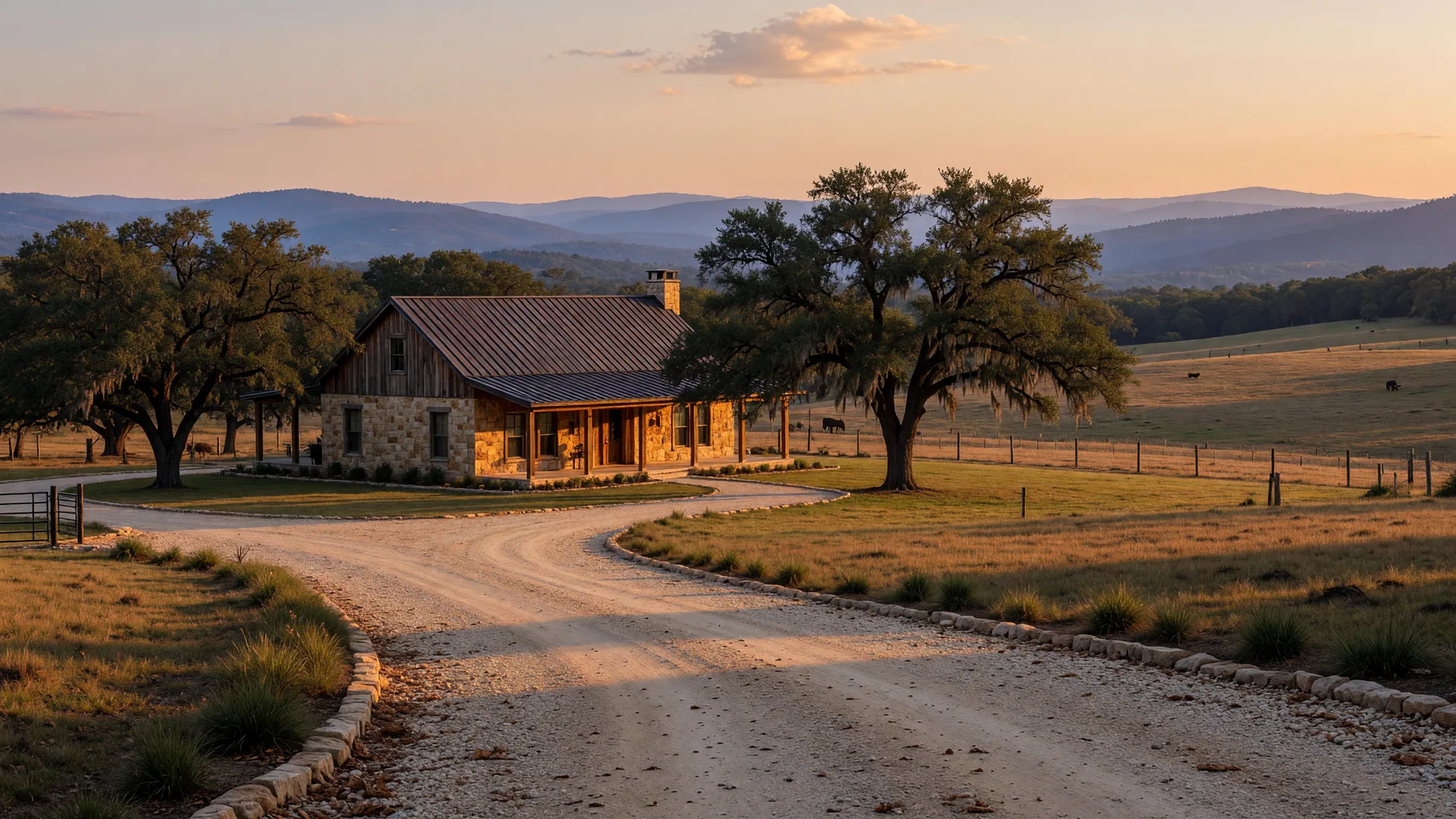
These communities sit on the edge of the Hill Country, and the housing stock reflects it: more land, more acreage, and a mix of custom and semi-custom homes on larger lots, not the tight subdivision grids you see closer to the city. A sizable share of these properties use private systems, so municipal utilities from 281 and I-10 don't necessarily reach the house.
- Water often comes from a private well rather than a city supply line.
- Wastewater often goes to an on-site septic system instead of municipal sewer.
- Inventory is thinner, and individual properties can sit on acreage measured in single or double digits.
- Commuting into San Antonio means real distance on 281, so drive time is a daily trade-off, not a footnote.
None of this makes these homes harder to buy, it just makes the details different. And the details are exactly where rural purchases go sideways: water rights, septic condition, and who's responsible for what between well and house.
The core team
Here is the lineup you'll want around the deal, in order of when they step in:
- A buyer's agent who knows the Hill Country: pick someone who has actually sold in Bulverde and Spring Branch, not an agent who mostly works the inner Loop and is happy to drive north.
- A lender who can handle the purchase and land/acreage nuance: rural properties still finance on a conventional, FHA, or VA purchase loan, but the details like wells, septic, and minimum acreage get evaluated by the appraiser, and the lender needs to know how to manage that.
- A home inspector: the structural and systems review of the house itself.
- A title company or escrow: they run the title search and the closing itself, and in Texas the settlement professional coordinates the signing and funds.
- A Texas real estate attorney for the contract: Texas does not require an attorney to buy residential real estate, but a real estate attorney can review your purchase contract and answer legal questions about the deal, and many buyers use one for rural purchases specifically.
The land specialists
Rural properties add two inspections that city buyers never think about:
- Water testing: if the home runs on a well, water quality and flow get tested, and the results can involve real costs to remedy. Know what's in the water before you agree to buy it.
- Septic inspection: if there's a septic system, a licensed inspector or experienced contractor checks tank, drain field, and leach lines, because a failing field can be a five figure fix.
It's also worth knowing the difference between a drilled well and community water. Some subdivisions bring water to the lot via a shared system rather than a private well, and each setup has different testing and responsibility when something goes wrong. Ask which one the property has, and have the inspector tell you what it means.
Here's the key: in the city, the house inspection is the inspection. On acreage, the well, the septic, and the driveway are all part of the deal too. Budget your inspection dollars for the whole package, not just the structure.
Putting the rural team together?
I can walk you through how well, septic, and appraisal details fit into a loan for acreage, and point you to the specialists who handle these deals regularly.
What each member does at each stage
Here's the same team, mapped to the stages of a purchase, as a plain numbered checklist:
- Offer: agent structures a strong offer with the right contingencies for the property, and the lender confirms you're qualified for it.
- Inspection: home inspector does the structure, while well and septic specialists test the land side.
- Appraisal: the appraiser values the property, acreage included, and the lender reads the report for fine points like well and septic condition affecting value.
- Underwriting: the lender clears your conditions and confirms the deal can close on the timeline.
- Closing: escrow and title make sure the deed and funds transfer, and your attorney, if you use one, reviews the final packets.
Everything between offer and closing runs on a contract schedule: inspection periods, seller disclosures, financing conditions. When one piece of that slips, it ripples. That need for a single truthful picture is why the next section matters.
How a team that talks to each other helps
A purchase like this has a lot of moving parts, and they only work when the contract and the loan stay coordinated. Inspections that find a water issue change the negotiation; the lender needs to know. A slower-than-expected septic test pushes deadlines, and the agent needs to protect the contract. When the people involved actually talk to each other, deadlines line up and surprises get handled before they become problems.
This is the one place a dual-licensed professional can smooth a handoff: when the same person is both the agent and the loan officer, the offer and the financing live in the same hands, so the coordination is built in. That's a convenience, not a requirement, and you should still vet the person for both roles just as you would a separate agent and lender. The point of the team is coordination, however you accomplish it.
Building your team
- Ask for referrals from people who actually bought acreage nearby, and ask the agent for names of inspectors they use in Bulverde and Spring Branch specifically.
- Verify licenses for the agent, the lender, and anyone doing specialist inspections or septic work.
- Interview before you commit: a five minute call with the inspector about how they handle well and septic is worth more than a star rating.
For more context on the two communities themselves, my Bulverde and Spring Branch guides cover the neighborhoods, schools, and what living out there is actually like.
Set up your acreage team right the first time.
I know the water, the acres, and the financing nuances of Bulverde and Spring Branch, and I can help you pull the rest of the team together. Let's talk about what buying out there really involves.
Frequently Asked Questions
Do I really need to test the well water before buying? Tap to expand
Is a real estate attorney required to buy a home in Texas? Tap to expand
Does a home on septic still qualify for a normal mortgage? Tap to expand

Patrick Kevin Fagan
Loan Officer and Realtor | AXEN Realty LLC | San Antonio and Texas Hill Country
Licensed Sales Agent | 454749 | TX | NMLS 877741
Sincerely, Patrick Kevin Fagan
This article explains commonly how buying on well and septic acreage works in the Hill Country area and is not legal or engineering advice. Well, septic, and contract questions should be addressed by the licensed professionals on your own deal.