
Patrick's Quick Answer
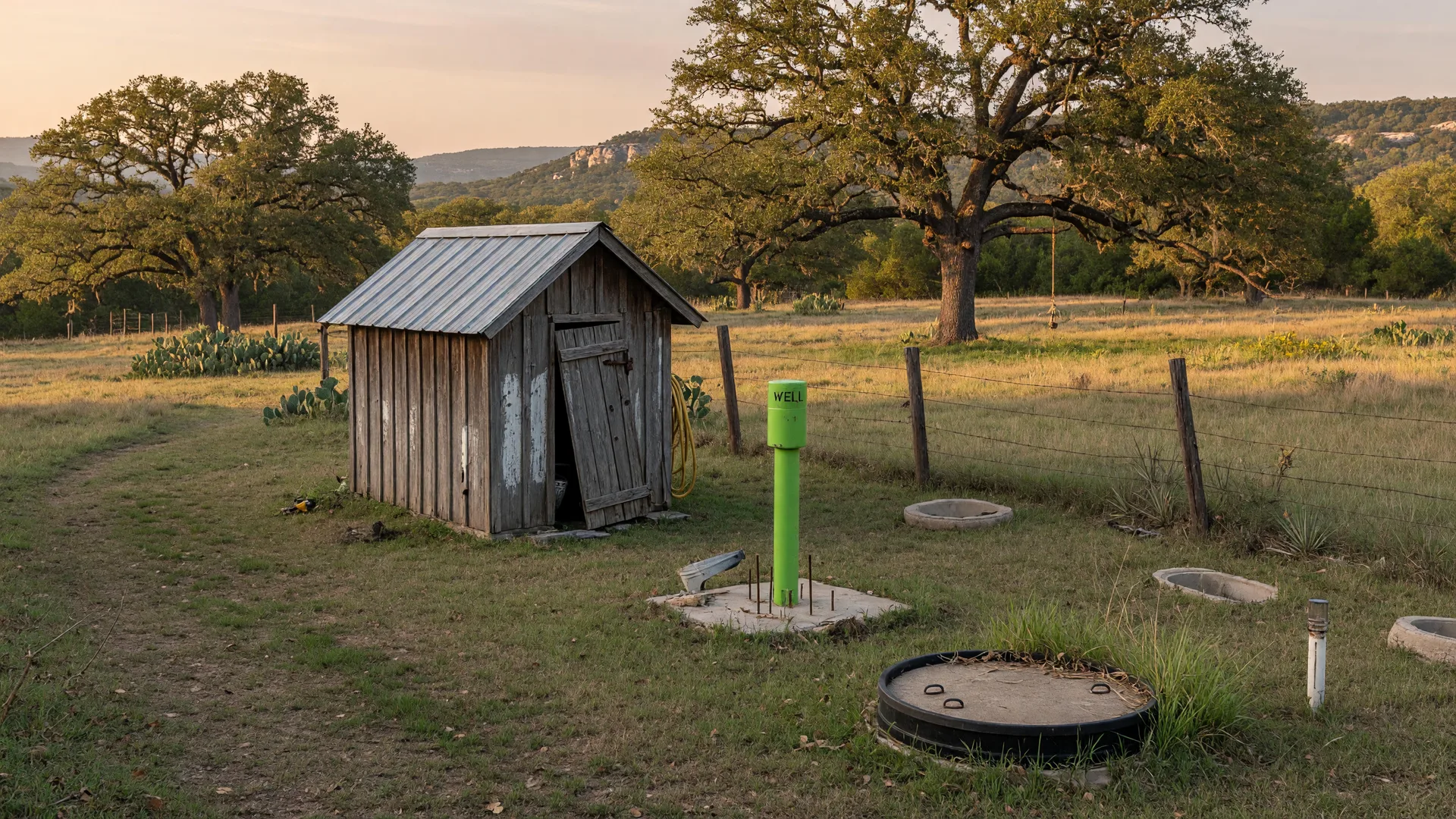
Plenty of Hill Country homes, especially in Bulverde, Spring Branch, and the outlying areas, run entirely on a private well and a septic system. The practical result: no monthly water bill, but you own the pump, the tank, and the maintenance, and you should budget for testing and upkeep. Lenders want to see that both systems function and the property appraises, so the well flow test and the septic inspection are real deal requirements, not optional extras.
First-time buyers from the city see "well and septic" on a listing and picture a house from the 1800s. Out here it's just the normal way homes are built, and millions of Texans live on them happily. Let's defuse the mystery so you know exactly what you're buying.
Why wells and septic are normal out here
City water and sewer pipes only reach so far. Once you're out past the utility lines, the economics flip: it costs more to run pipes to a single home than to drill a well and install a septic system. So rural and semi-rural properties rely on what's on-site. That's the whole reason.
In subdivisions closer to San Antonio you get city-style water and sewers; on acreage in Spring Branch or the outer Bulverde areas you get wells and septic. The listing or the seller's disclosure will tell you which one the house has.
How a well works and what to test
A drilled well pulls groundwater from an aquifer under your property and pumps it into a well tank that feeds the house. What you own is the casing, the pump, the well tank, and the controls, all of which wear out eventually.
- Water quality. A laboratory test covers bacteria, minerals, and anything else relevant to your area. Know what's in the water before you buy the house.
- Flow rate. The well's recovery rate determines how much water you can actually use. A weak well means you can't run the sprinklers and the washing machine at once, or worse.
- Pump and tank age. Pump and well tank service lives are finite. A 15-year-old pump is working today and could be a line item tomorrow.
During your option period, your agent orders these tests from a licensed well contractor or lab. If the water fails or the flow is weak, that's negotiation material, and sometimes a deal-breaker.
How septic works and what inspection covers
A septic system is a buried tank plus a drain field. Waste flows into the tank, solids settle, and the liquid moves out into the field where the soil treats it. It's smart, silent, and horrifying when it fails.
A septic inspection checks the tank level and structure, the lids and baffles, and the drain field's condition. It flags soggy spots, strong odors, slow drains, and tells you how old the system is and how much capacity it has. Texas regulators and most lenders require a working system, so an inspection that comes back failed puts the conversation back on the seller.
Here's the key: the well and the septic have to be treated as two of the most expensive systems in the house, and they get none of the respect a kitchen does. Inspect both, test both, and budget for both.
What to ask the seller and your inspector
Go in with questions ready, because sellers give you more honesty at the table than in the ad:
- How old is the well, and when was the pump last replaced?
- How old is the septic system, and when was it last pumped and inspected?
- Have there been any well flow, water quality, or septic problems?
- Who did the last maintenance, and are the records available?
Then confirm each answer with your own inspections. Sellers are rarely dishonest here, but systems fail in ways nobody remembers until they're under contract. My home water quality Q&A has the deeper checklist.
What it costs to maintain
I won't quote specific price tags because they move and they're regional, but I will tell you where the money goes. Routine water testing and filter changes are modest. Septic pumping every few years is a planned cost. The big numbers walk in when a pump dies, a tank needs replacing, or a drain field fails, so a modest annual reserve is the responsible habit.
Contrast that with a city utility bill: on well and septic you have no monthly water and sewer charge, and you trade it for ownership-sized maintenance. Over a decade that math usually works in your favor, as long as you planned for it.
Wells, septic, and your mortgage
Your lender cares about two things: the property appraises for the purchase, and the systems that serve the home are functioning and safe. Most loans require the well to have a flow test and a water quality report, and the septic to pass an inspection, especially FHA and VA.
This is why buying with a lender who has done Hill Country acreage matters. The inspector schedules, the county requirements, and the appraisal nuances are different in Comal and Bexar backcountry than they are in the city, and I run them for every country home I finance. Read more in my acreage purchase checklist.
Buying on well and septic? Let's make sure the deal survives it.
I know exactly which tests and documentation your loan type will need on a well and septic property, and I'll help you line up the inspections during the option period so nothing surprises you at closing.
Frequently Asked Questions
Is well water safe to drink in the Hill Country? Tap to expand
Who pays for well and septic repairs after closing? Tap to expand
Do FHA and VA loans allow wells and septic? Tap to expand
Run the well and septic checklist with someone who's done it
Country houses are just houses with a little more homework. I'll walk you through every test, inspection, and line item so you buy yours with your eyes open.

Patrick Kevin Fagan
Loan Officer and Realtor | AXEN Realty LLC | San Antonio and Texas Hill Country
Licensed Sales Agent | 454749 | TX
Sincerely, Patrick Kevin Fagan
Well and septic guidance in this post is directional and varies by county, property, and loan program. Always use licensed inspectors and follow your lender's specific field requirements.